

Somewhere between a K-drama binge and a first bite of fried chicken, Americans fell hard for Korean food. The romance began on screen, with heroines slurping ramyeon at midnight, and ended up in the grocery cart, where tubs of gochujang now nestle beside ketchup. Even Seoul has noticed: when South Korea’s culture ministry polled fans abroad this year, food edged out K-pop as their favorite part of Korean culture. Over here, Korean restaurant chains now multiply faster than you can say tteokbokki, outpacing nearly every other cuisine. That appetite has reached the Gulf Coast. A stone bowl hisses with bibimbap in Bradenton. Pork ribs braise in kimchi off Fruitville. Wagyu sizzles on a tabletop grill in Lakewood Ranch. Most local cooks learned at a parent’s elbow rather than in culinary school: the sisters of Sunny Seoul, the Choi brothers of J’s Korean Food, the Namgoong family of Korean Ssam Bar, Justin Nam’s Mr. Bulgogi trucks and Chef Clark Jinsung Park at Kore Steakhouse. The recipes cross generations, from clay pots of kimchi buried in winter to a mother consulted by phone from Seoul. What follows is a guide to those five tables, from a lunchroom steps from the hospital to a Korean steakhouse serving up Japanese A5.
Kore Steakhouse
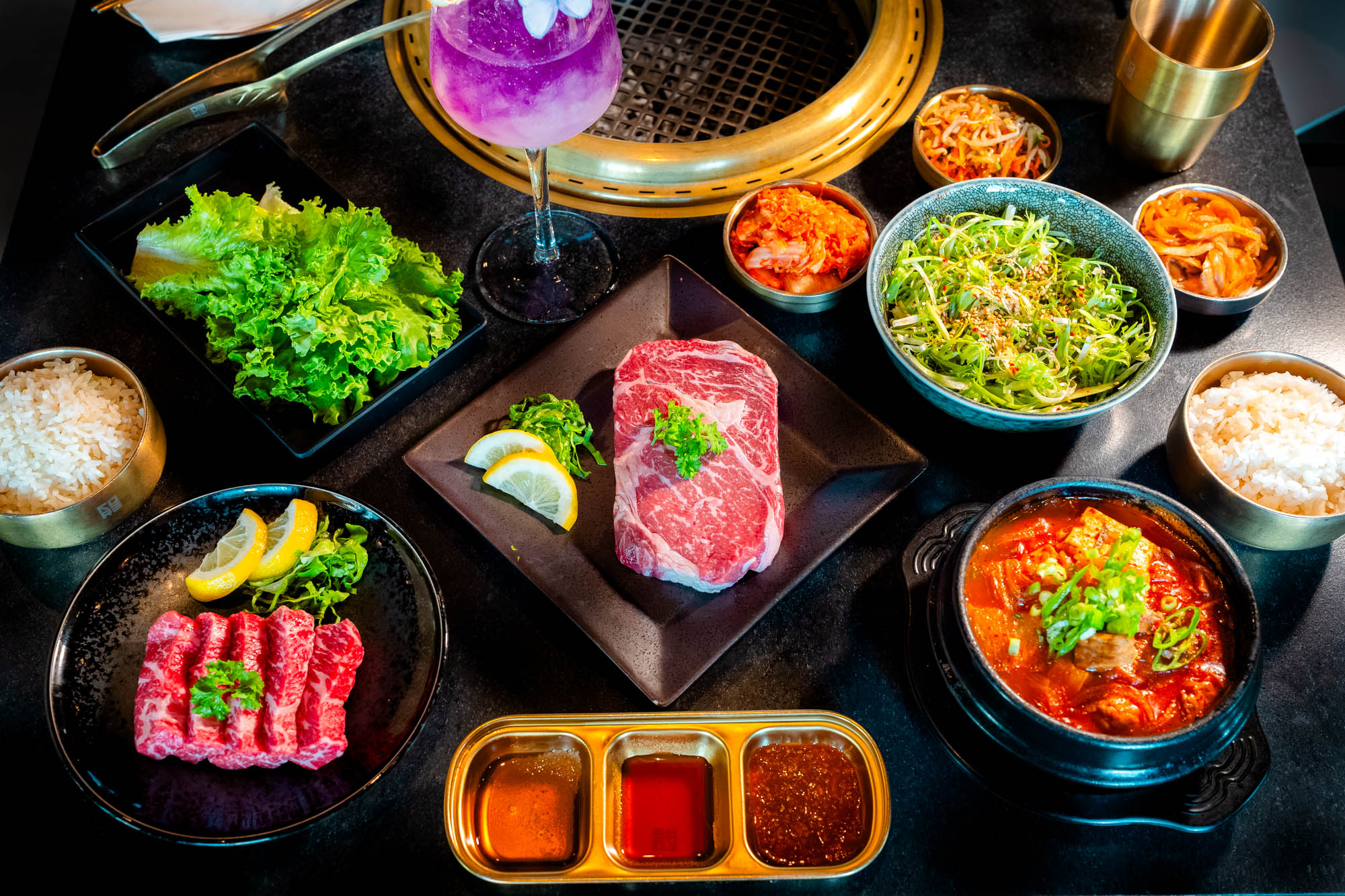
A Korean feast often opens with yukhoe, a cousin of steak tartare: finely minced raw meat traditionally topped with a raw egg yolk. At Korê Steakhouse in Lakewood Ranch, the kitchen gives it a modern finish: mandolined slices of green apple, black tobiko, tempura crunch, scallions and sesame seeds, the whole plate perfumed with truffle oil. It’s all about texture: each bite brings crunch and an explosion of flavor. Tobiko pops and apple snaps against the silky beef, with a crackle of fried batter in every bite. Settle into a pale wooden booth, where a grill waits in the center of the dark tabletop. Gray stone floors give the room a sleek, modern polish, yet the booths invite a long meal. Despite a fire at every table, the air stays clear; vents draw the smoke down and away from diners.
Clark Park, Kore’s executive chef and a partner in the restaurant, started cooking in Seoul restaurants at 19. He later spent eight years at JPAN’s UTC location, the popular sushi spot that served its last rolls this past September after a decade. He conceived Kore with JPAN owner Daniel Dokko and Anderyas Putranto, working out everything from the dining room to the marinades. For the Korean recipes, though, Park calls home. “For most of the recipes, I ask my mother,” he says. “How to make kimchi or, you know, all the stuff, like side dishes.” The kitchen makes a fresh batch of kimchi every week, and “the salad, the soup and pancake are my mom’s recipes,” he adds.
Park couldn’t predict how American diners would respond. “They don’t know about Korean food, but if they come here and the flavor is good, they are going to eat it,” Park says. “So I just focus on that.” Where his mother’s versions needed adjusting, he pushed for more flavor, testing and tweaking until each dish satisfied him.
His own favorite, kimchi jjigae, turns up on tables all over Korea. Park’s version simmers pork and tofu in a fiery, sour kimchi broth, hearty enough to stand alone as lunch. In Korea, he explains, the stew doubles as a cure the morning after a night of drinking. “You can just eat soup,” he says. “It’s good for your gut and everything.” The grill program treats the tableside format with steakhouse seriousness. Raw meat and seafood appear in portions of three to four ounces for diners to cook themselves, and the beef list rivals any chophouse’s. Australian producer Jacks Creek supplies an eight-ounce Wagyu strip and a Wagyu ribeye cap, while a separate menu offers certified Japanese A5, some of it seared on a volcanic rock at the table. A server, who hails from Seoul, sets down a tray of divided golden plates, each labeled: pork collar, picanha, galbi short ribs and filet mignon, raw and flecked with parsley. A dial controls the grill. The server fires it up and hands over the chopsticks, then—if you so require—calls each piece when it reaches the right doneness. Koreans grill this way all over the country, even in train stations between departures.
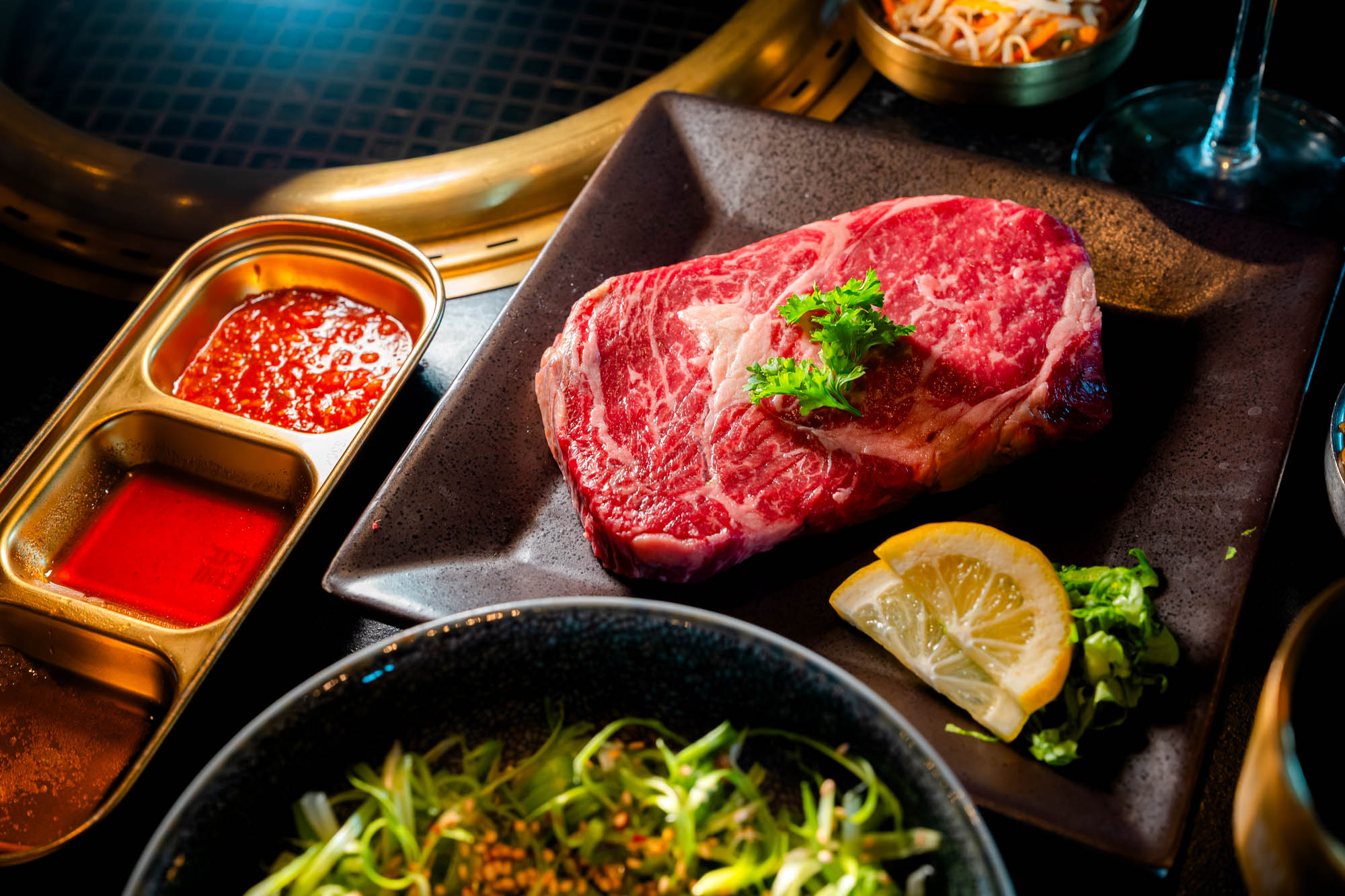
Between rounds over the fire, shareable plates crowd the table. Cheesy corn bakes sweet kernels with mayo and mozzarella into a creamy dish with a golden, blistered top. Haemul pajeon, the popular seafood pancake, packs squid, mussels, shrimp and octopus into a round with crisp edges, big enough for the whole group.
Lunch deserves more attention, in Park’s view. “People don’t come inside at lunchtime,” he says, still puzzled. “We have a really good lunch here.” Midday diners can fire up the tabletop grills too, and he touts the lunch special. Kore can pass for a splurge reserved for special occasions, yet the room welcomes a weekday visit, and the friendly staff walks first-timers through every step.
With JPAN’s UTC doors closed, the partners have carved a small sushi counter inside Kore, bringing several JPAN favorites to the menu. Wagyu and sushi rolls share the table, with a dish of Park’s kimchi, his mother’s recipe, between them. Korê Steakhouse, 1561 Lakefront Drive #111, Sarasota, 941-928-5673, koresteakhouse.com
J’s Korean Food
At J’s Korean Food on Hillview Street, a short walk from Sarasota Memorial Hospital, the chicken takes two turns in the fryer. The double fry leaves a crust that crackles at first bite over juicy meat and keeps going. Cubes of chikin-mu, the sweet and sour pickled daikon served with fried chicken all over Korea, wait on the side to reset the palate, with rice or fries to round out the plate. “Korean fried chicken is our number one seller here,” says Jeffrey Choi, 29, who manages the front of house.
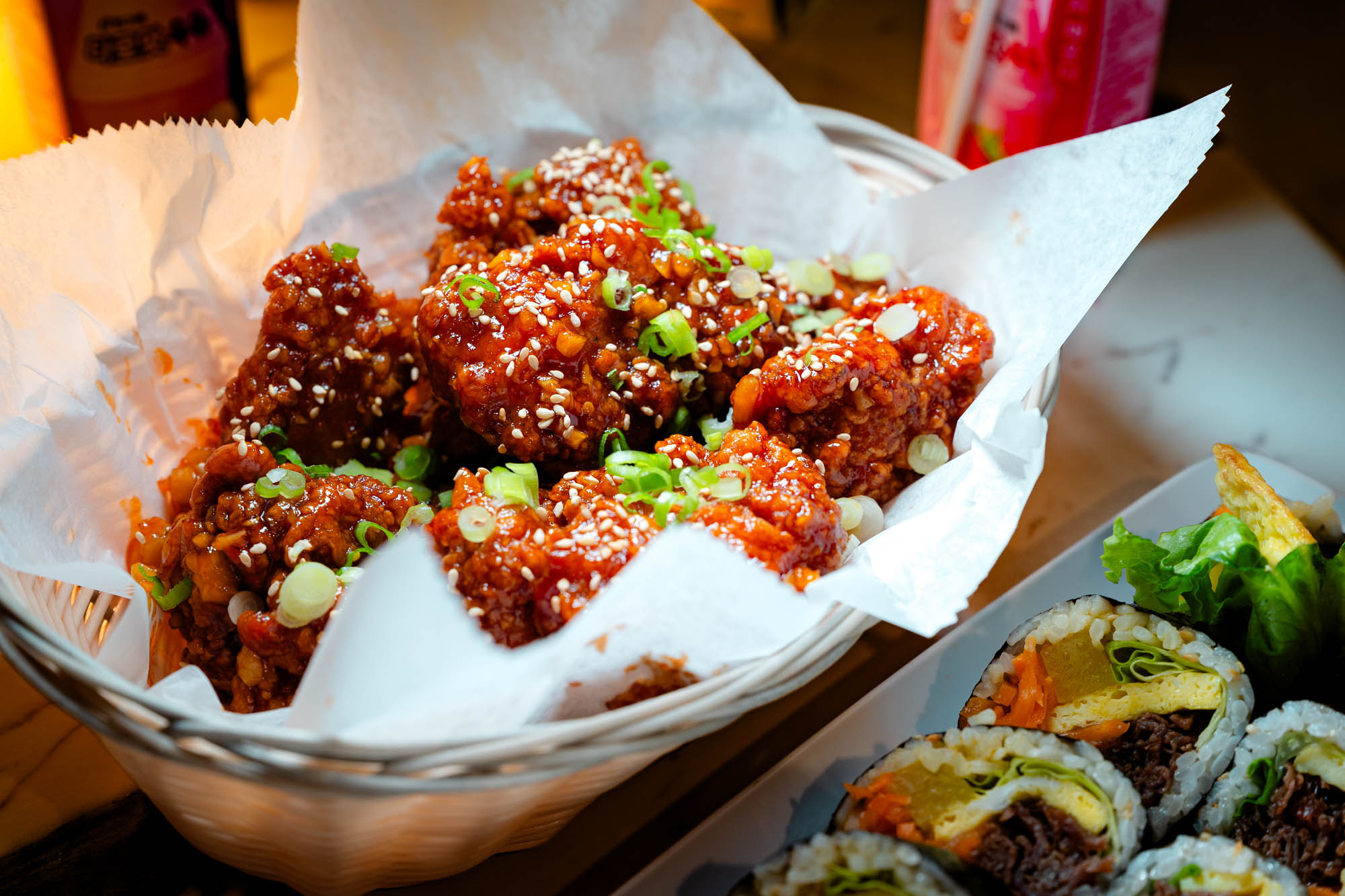
His brother Brian, 24, leads the kitchen as head chef. The brothers grew up in New York and have lived in the Sarasota-Bradenton area for about 20 years. The recipes belong to their father, who cooked at home and for the family’s church. He spent the restaurant’s first year beside Brian at the stove, training him, before the brothers “fully retired” him last November. The Chois opened in October 2024 with confidence in the food and, by Jeffrey’s admission, little else. “My dad and my younger brother, they never worked a day in the restaurant,” he says. “So we opened this business a little blind.” Jeffrey brought the industry experience, from years in front- and back-of-house roles to stints as a sushi chef and a hibachi chef.
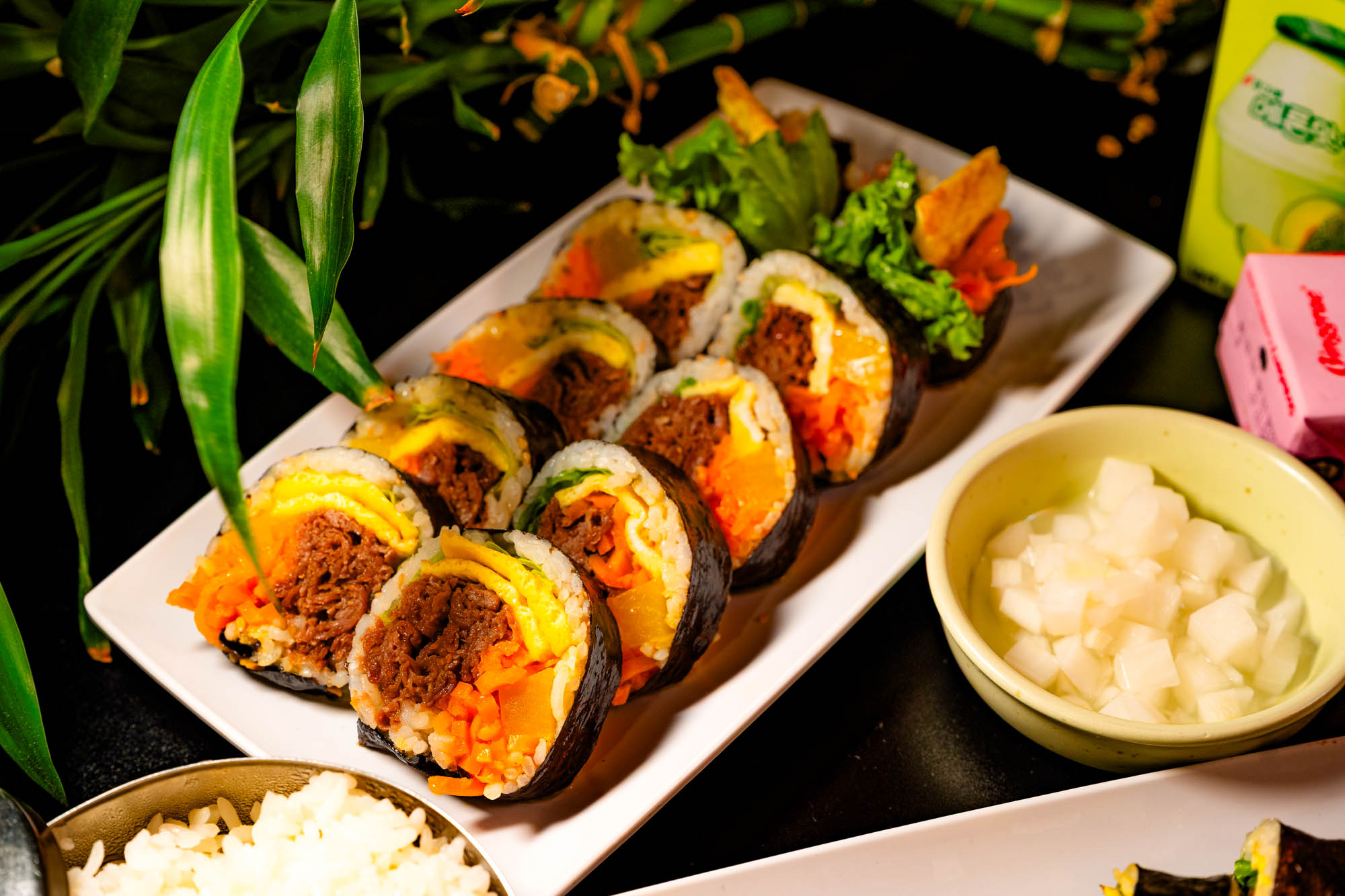
Location helps. “We got a prime location,” he says, “and people over in the hospital, they really enjoy our food.” Weekday lunches outdraw dinner, and weekends fill both services. Beyond the occasional Facebook or Instagram post, the brothers skip advertising and let customers spread the word. One diner’s TikTok “really blew up business,” Jeffrey says, and fans now drive over from Fort Lauderdale. The menu mirrors a Korean home kitchen: bulgogi, bibimbap, japchae and dumplings, plus kimchi jjigae with pork belly and tofu, and jjajangmyeon, noodles in glossy black bean sauce. Kimbap lines up ten slices per order, each a cross-section of carrot, egg, lettuce and sweet pickled yellow radish ringed in rice and seaweed, with beef or just vegetables at its core.
“When you think of Korean food, you think of kimchi,” Jeffrey says. The brothers make theirs in-house, along with every banchan. “It’s all family-style recipes,” he adds. “Everything’s made nice and fresh.” Those recipes reach back further than their father. “They’re my dad’s recipes,” Jeffrey says, “but it’s from his grandparents that he learned how to cook.” J’s Korean Food, 1962 Hillview St, Sarasota, 941-919-3774, jskoreanfood.com
Korean Ssam Bar
At Korean Ssam Bar, the kimchi jjim bubbles in its pot: pork ribs braised with kimchi until the broth turns tangy and mellow and the sour bite of fermented cabbage melts into the pork. “That’s my soul food,” says co-owner Yun Namgoong, who orders it for her own dinner.
The family moved Ssam Bar on May 1 to a new home at Beneva and Fruitville roads. Five of its tables now house grills for Korean barbecue, while the rest serve a steady lunch crowd. Yun co-owns the restaurant with her husband, Yup Namgoong, who cooked for years at Sam Oh Jung in Bradenton, and her mother and sister work beside the couple. “It’s all family, kind of a family-owned restaurant,” Yun says. She arrived in Sarasota at 17 and spent more than 20 years as a social worker. “The recipes come from my mom and my grandma, because I grew up with my grandma,” she says. “It’s more of my grandma’s taste.” Her childhood kimchi lived in the ground. Each year in late October or early November, before winter set in, the family gathered for two days to salt and season some 200 heads of cabbage. “I remember gathering around with my mom, everybody, sitting around to make a kimchi,” Yun says. The finished kimchi went into clay pots she remembers as five feet long, sunk into the earth. “You dig in the ground, then you put that clay pot in it,” she explains. Those pots fed the family through winter and spring.
Today Yun keeps her kimchi mild and vegan. She skips fish sauce, grinding onion with apples and pears to sweeten the paste, so vegan customers stock up by the pint or quart. “It’s so healthy,” she says, crediting its “live probiotics.” The menu follows suit. The stone-pot bibimbap crackles as the rice toasts against the hot bowl, and diners top it with beef, pork, chicken or tofu; vegans skip the egg and add broccoli. “We have a lot of vegan options actually,” Yun says.
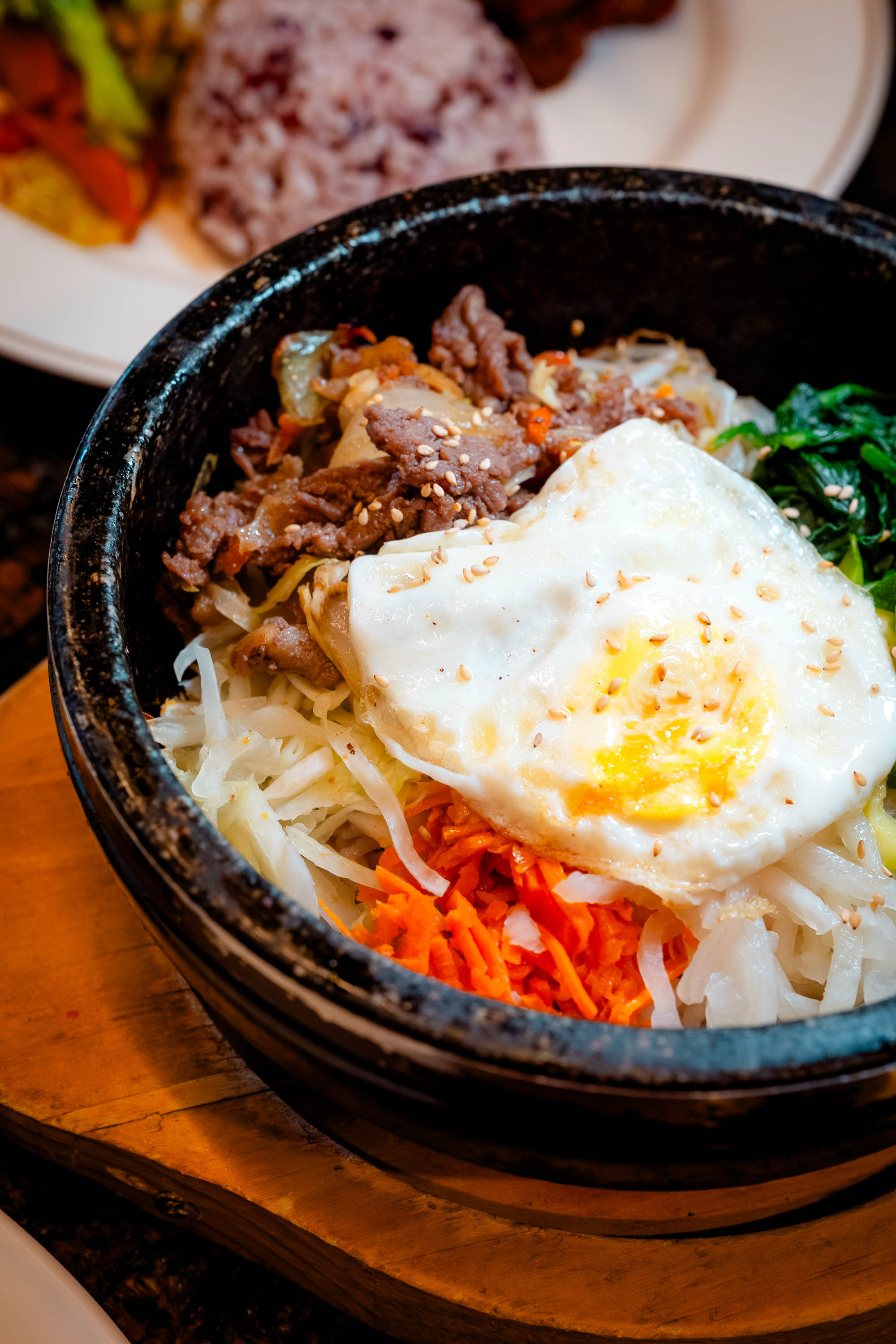
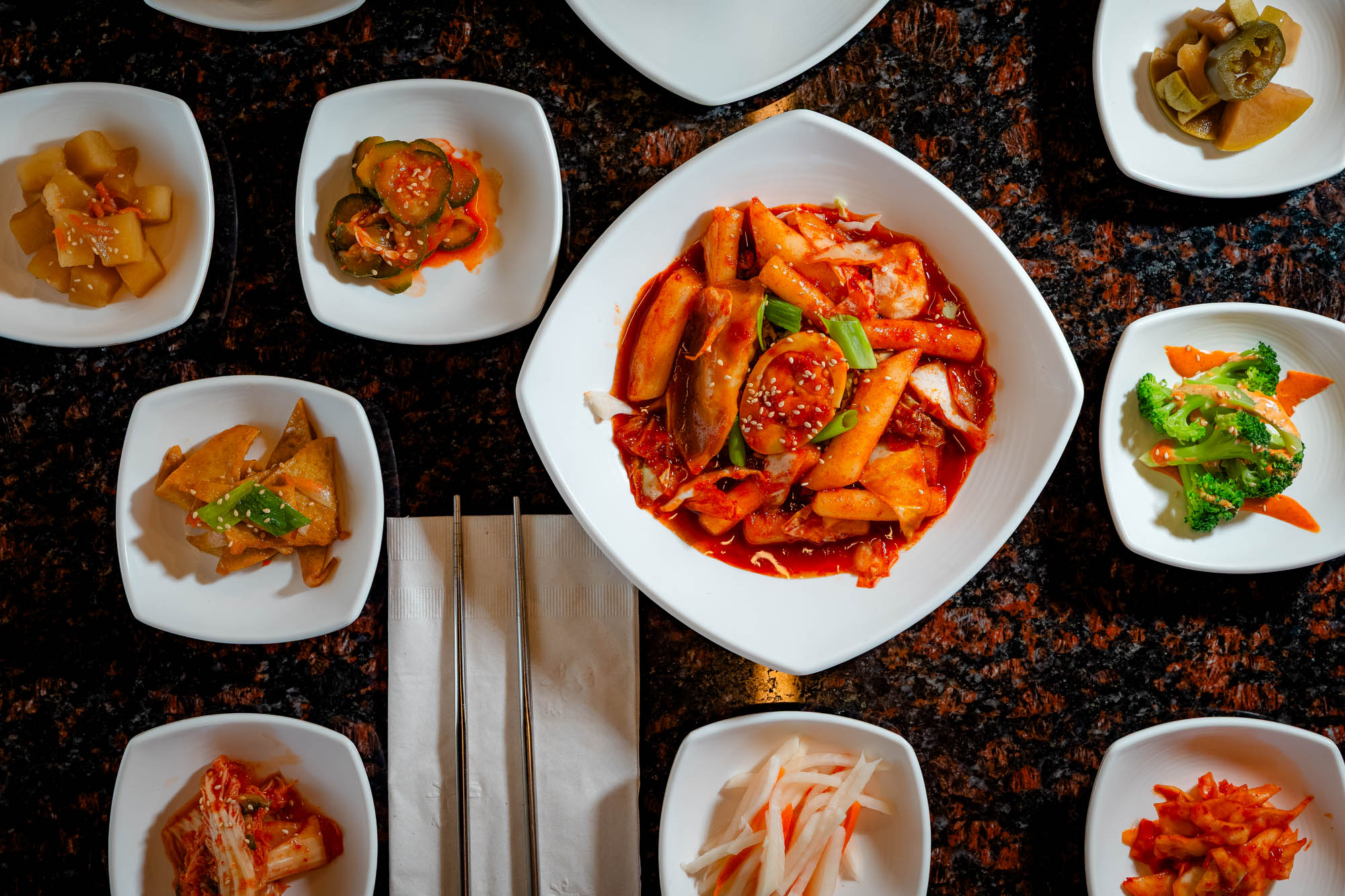
Dinner brings the spicy pork, a house favorite: thin slices with very little fat, marinated in a spicy sauce and served sizzling on a silver platter. Heat climbs from zero to five, a scale that also governs the stews; level three satisfies most spice lovers. Banchan accompanies every dinner: radish, cucumber pickle, bean sprouts, kimchi and chayote Yun pickles herself. Lunch plates swap in ginger salad and stir-fried vegetables.
Tteokbokki, chewy rice cakes simmered with slices of fish cake in sweet gochujang sauce, outsells every other appetizer on the menu, with young K-pop fans leading the charge. “A lot of people order it,” Yun says. The galbi pairs rice with grilled short ribs. At the grill tables, portions feed two to four and carry a set price rather than a per-person charge, so a party of four can order for three and nobody leaves hungry.
When Ssam Bar opened on North Washington Boulevard in 2017, it ranked among the first restaurants to broaden Sarasota’s Korean dining scene. Nine years on, the new room adds live fire to the formula, and the kimchi still leaves by the quart. Korean SSam Bar, 501 N. Beneva Rd #240, Sarasota, 941-413-5080, cloveronline.com
Mr. Bulgogi
At the window of a Mr. Bulgogi truck, owner Justin Nam assembles the Ultimate Bowl in seconds: rice, a nest of japchae, two dumplings and a choice of meat, with crisp lettuce for crunch. The Ultimate Combo loads up further. “The ultimate combo has three meats, which is the beef bulgogi, teriyaki chicken and spicy pork bulgogi,” Nam says.
Tastes swing from day to day between chicken and beef, he says, but “I would say the most popular one would be the bulgogi.” Nam and his wife, Soung-Ja, drive the two trucks, which rotate around Cattlemen and Clark roads. They prep everything at a commissary before each shift and keep the components in warmers, assembling bowls as orders roll in. With nothing cooked on site, the line moves fast.
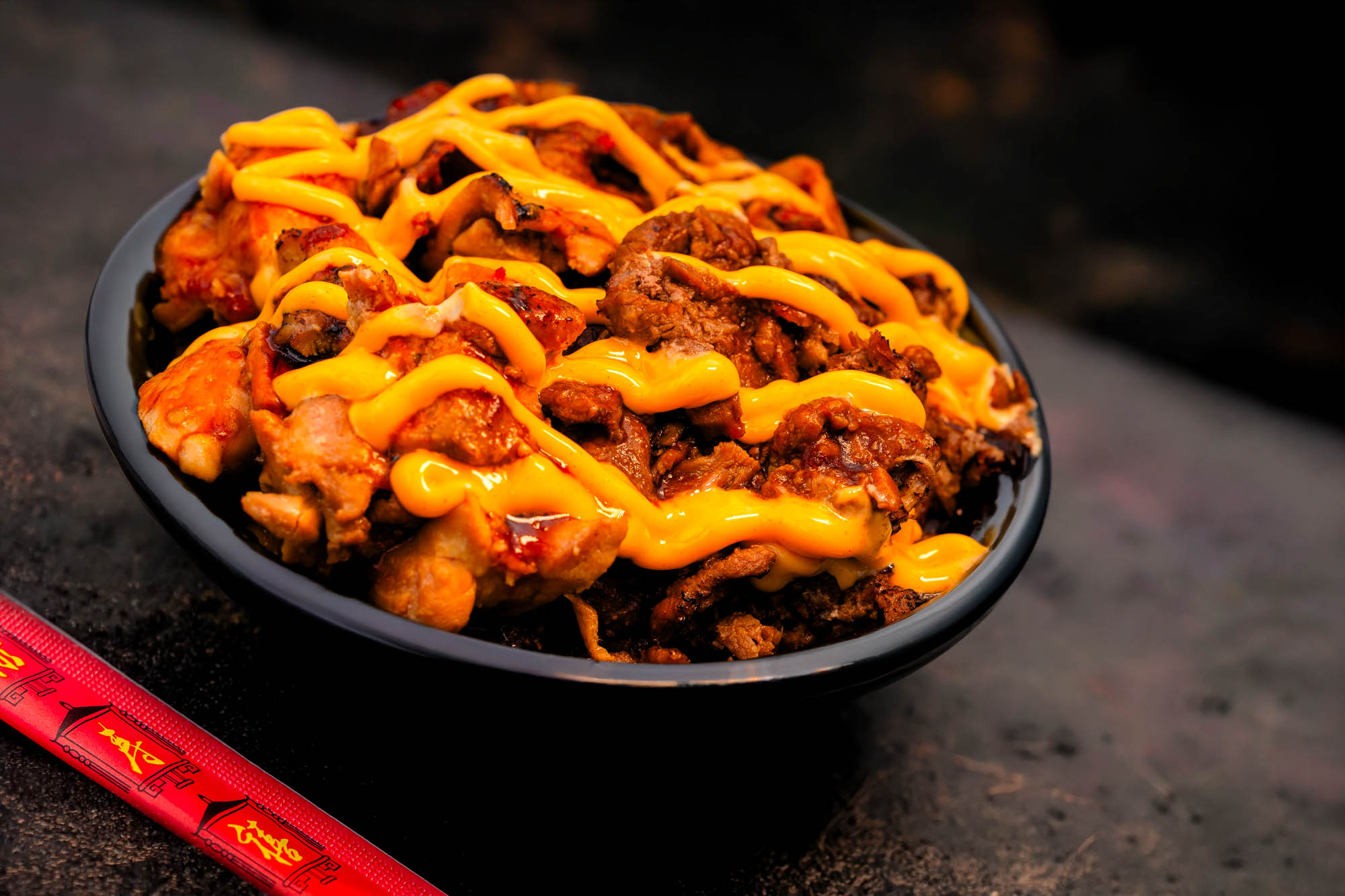
Each truck serves 30 to 35 orders per shift, often parked at apartment complexes during a 5-to-7pm dinner window. Nam grew up on an island in South Korea, where “we’re all surrounded by the ocean,” and knew seafood from childhood. When he was 13 or 14, his parents opened a restaurant, and he pitched in. “I watched them over their shoulder to learn how to cook,” he says. After moving to the United States in 2012, he worked as a sushi chef before striking out on his own. His first truck, K9 Style, sold Korean-Mexican tacos and quesadillas in 2018.
The couple later opened Cannon Korean Barbecue at Clark and Beneva roads, then closed it in June 2025 to concentrate on Mr. Bulgogi. The trucks suit the couple for now. “We’re gonna stick with this concept for at least a few more years,” Nam says, though a brick-and-mortar restaurant remains on his wish list. “We’re gonna see what opens up.” Mr. Bulgogi, 330 Cattlemen Rd, Sarasota, 941-993-0020, mister-bulgogi.com
Sunny Seoul Korean Kitchen
At Sunny Seoul Korean Kitchen in Bradenton, hot stone bibimbap hisses in the black ceramic bowl: bulgogi beef tangled with carrots, zucchini, spinach, pickled cucumber, mushrooms and bean sprouts, a fried egg bubbling over top. Drizzle in gochujang sauce and let the bowl sit so the rice turns crisp against the stone, then stir. “Korean cuisine, I love it because there’s so much variety in flavors,” co-owner Mary Pierson says. “There’s the sweet, the spicy, the salty, and then you have crunchy and all the chewy.”
For traditional seating, slip off your shoes at the hanok corner and settle onto floor cushions at a low table. “That’s how we grew up,” says Pierson’s sister Katherine Kim, co-owner and chef. “Sitting on the floor, eating and watching TV. I wanted everybody to experience the traditional hanok.” Korean calligraphy that belonged to their late parents hangs on the wall. “To remember my roots,” Kim says.
Pale slatted screens frame the alcove from the main room, where diners order at the counter. Kim calls it “elevated fast casual,” freshly made food at an affordable price, a common style across Korea. Contractor Tommy Nguyen ran with her vision: two-top tables against floating wood shelves, and cushioned benches on a bamboo base, all set off by gray walls with a gallery polish that belies the tray-return sign. Dishes and utensils hail from Korea. A self-serve drinks case offers a glimpse of Asian convenience-store culture: Milkis, Chilsung Cider, chilled rice punch and rotating Demisoda flavors beside choco pies and honey tea cookies. Kim’s housemade kimchi never lasts long.
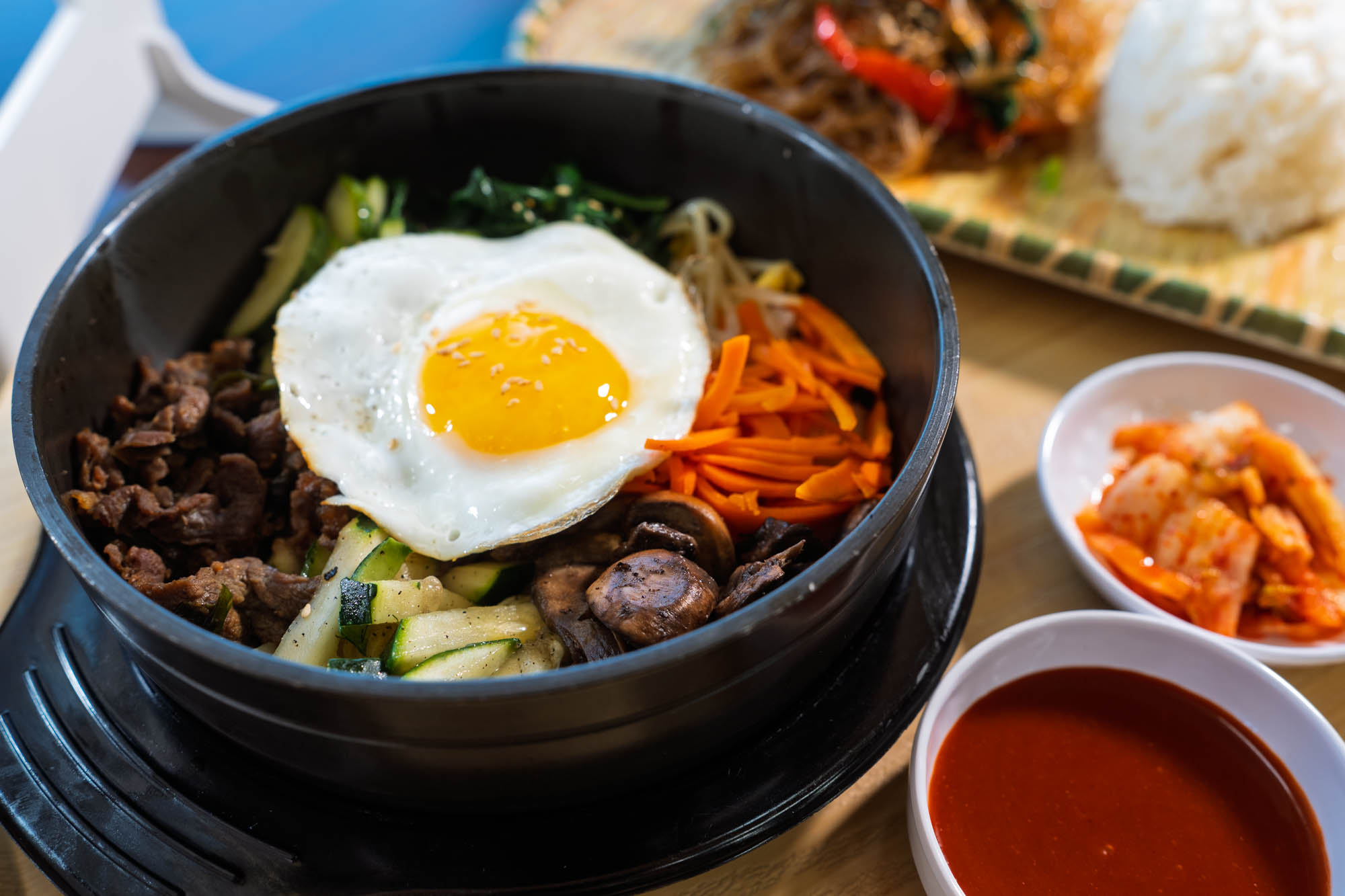
Kim and Pierson grew up in Queens, NY, children of hardworking immigrants. Kim cooks in their family’s northern Korean style, lighter than the highly spiced food of the south. She taught high school chemistry; Pierson worked in fashion design. The restaurant idea took shape in New Jersey after “we did our careers and raised our kids,” Kim says, but it was Pierson’s move to Lakewood Ranch that pulled her sister south. “There’s a need for it here,” Pierson told her, meaning Korean food for a broader audience.
Korean fried chicken has become a modern phenomenon: boneless, crackling at first bite. TikTok influencers arrive to film that satisfying crunch, and viewers follow the sound to Bradenton. Kim fries in beef tallow, never seed oils. “We’re very aware of the damage that’s done,” she says. The crunch holds up through every dunk in sweet-and-spicy dipping sauce. Vegetable fried rice, heaped on the mat, scatters a few runaway peas. The galbi platter begs for sharing. Bone-in short ribs reach the table charred at the edges and lacquered in a sweet soy marinade, the meat yielding to the teeth. Gooey onions melt into the juices, while sesame seeds and scallions add bite. Smoke and sugar meet fermented tang, the balance at the heart of Korean barbecue. Banchan rotates daily; expect kimchi beside the likes of pickled cucumber and seasoned spinach.
The family earned this dining room the hard way. After the lease was signed, county permits stalled the build-out, so the landlord offered a workaround: a food trailer in the lot. Kim and her son Justin, with a few high schoolers pitching in, cooked out of that cramped space for almost a year and won a loyal following. Justin Kim now manages the front of house. Kim’s daughters split signage, menus, marketing and social media among them.
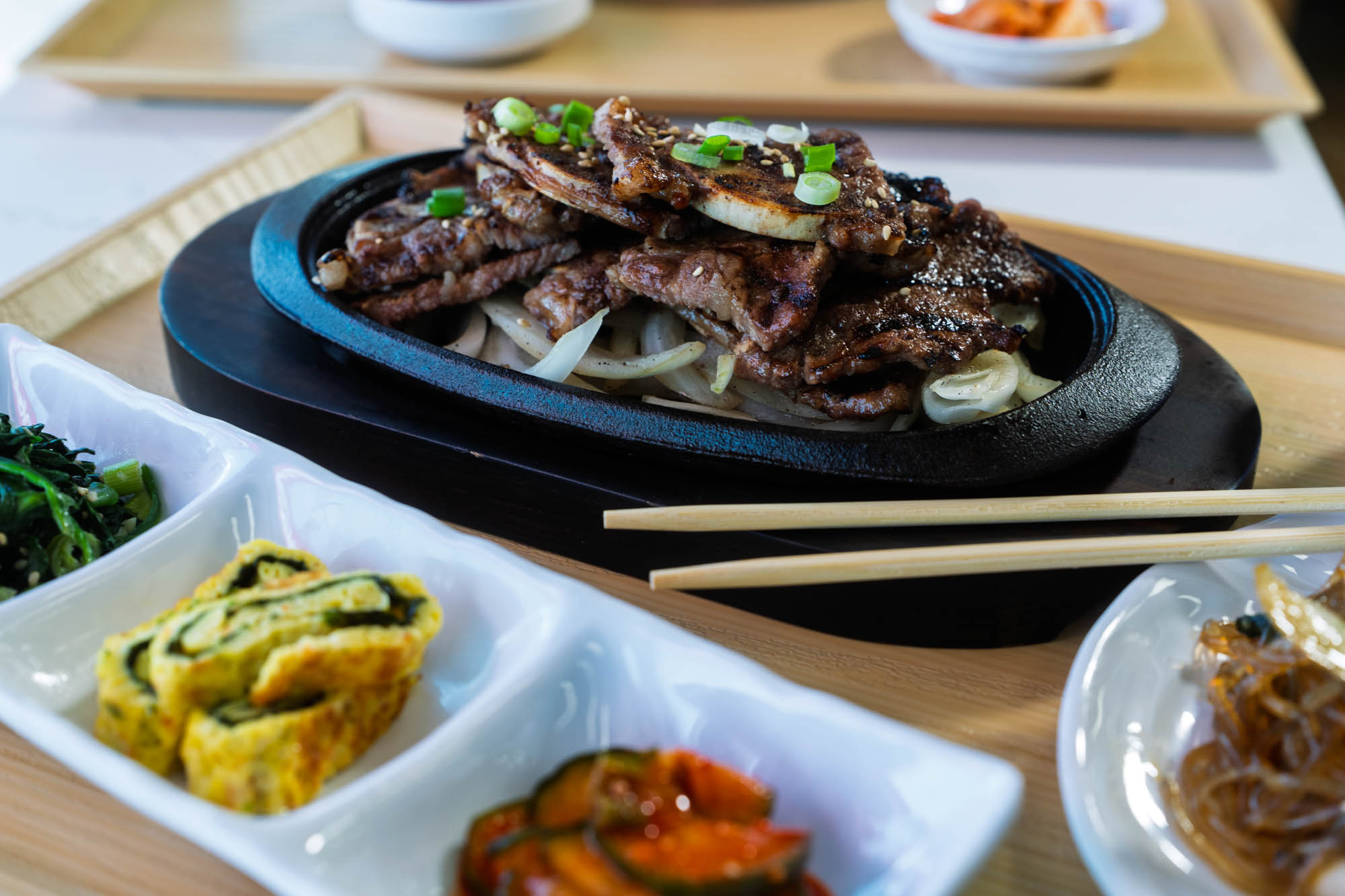
Japchae, sweet potato noodles, offer a glassy chew, slippery with sesame oil, while the vegetables keep their bite. For the mandu, Kim hand-mixes the filling before feeding it into a dumpling machine. They’re steamed, then pan-fried, so a toasty outer crust gives way to a tender, earthy center. “I found the right balance,” Kim says. “it represents the Korean dumpling.” A fried version keeps winning converts.
Son-mat, literally “hand taste,” is Pierson’s word for the gift she and her sister share: a feel for flavor that belongs to the cook alone. They learned by watching their mother and grandmother, then eventually took over. They were working 14, 16 hours a day, so we just had to fend for ourselves,” Kim recalls. “And when we got older, we would entertain a lot.” What began as necessity became son-mat. Their father instilled the standard. “When we wanted Chinese food, he would take us to Chinatown,” Pierson says. “If we wanted seafood, we would go to City Island and have fresh king crabs. He was very into authentic things.”
Korean customers test that authenticity. “I kind of cringe,” Kim jokes, “because they’ll be the worst critics. But we’ve been getting positive feedback.” Newcomers seek out kimbap, the seaweed-wrapped rice roll familiar from K-dramas. Save room for bungeoppang, housemade fish-shaped waffle cakes griddled to order, filled with sweetened red bean. “People are enjoying my vision,” Kim says. “That’s what I wanted.” Sunny Seoul Korean Kitchen, 9750 FL-64, Bradenton, 941-398-5942, sunnyseoulkitchen.com SRQ